Photo Gallery


Comments

Popular posts from this blog

Week 3! Bird Banding

 As I alluded to last week, I went bird banding! Well, in a way. Bird banding is a practice where an ornithologist or someone who is otherwise certified, places a numbered band/ring on the right leg of a bird. This identification acts as a way to track where this bird has migrated to, if collected again. My role in all this was rather limited this week, but essentially I was there for the ticks. Migratory birds become a public/veterinary health concern because they often give a “free ride” to ticks that are native to where the bird may have migrated from. If you have been following along with my post, I often encounter  Ixodes  and  Dermacentor  genus ticks while conducting surveillance. If these birds transported nonnative ticks such as,  Amblyomma americanum  (Lone Star tick) or  Haemaphysalis longicornis  (Asian Longhorned tick), then humans and animals alike may be susceptible to varying introduced pathogens.   Wells Reserve Ent...

Week 8! UM Long-Term Surveillance, 1st Instar Larvae, and Mammal Trapping

 Week 8 has now come to a close and I am excited to share some new information with you all. This week there was 3 main tasks; completion of the UMaine long-term surveillance transects in Wells, my first solo experience setting gravid traps for the Pesticide Resistance project, and aiding as a scribe for a small mammal trapping project.  University of Maine Long-Term Surveillance To start this post off, there was lots of work to complete for the UMaine project. Before I can begin to sample the area, it is helpful to use flagging tape to mark out the transects that I will be dragging in. There is 10 transects that consist of 100 meters where every 10 meters the flag must be checked for ticks. To streamline this process, each 10 meters was marked and labeled so that anyone could perform this surveillance in an effective fashion. The time-consuming aspect of doing this, was that the previous start and end markers I placed were not universally 100 meters. Members of the UMaine coo...

Week 5! Mosquitos and Birds

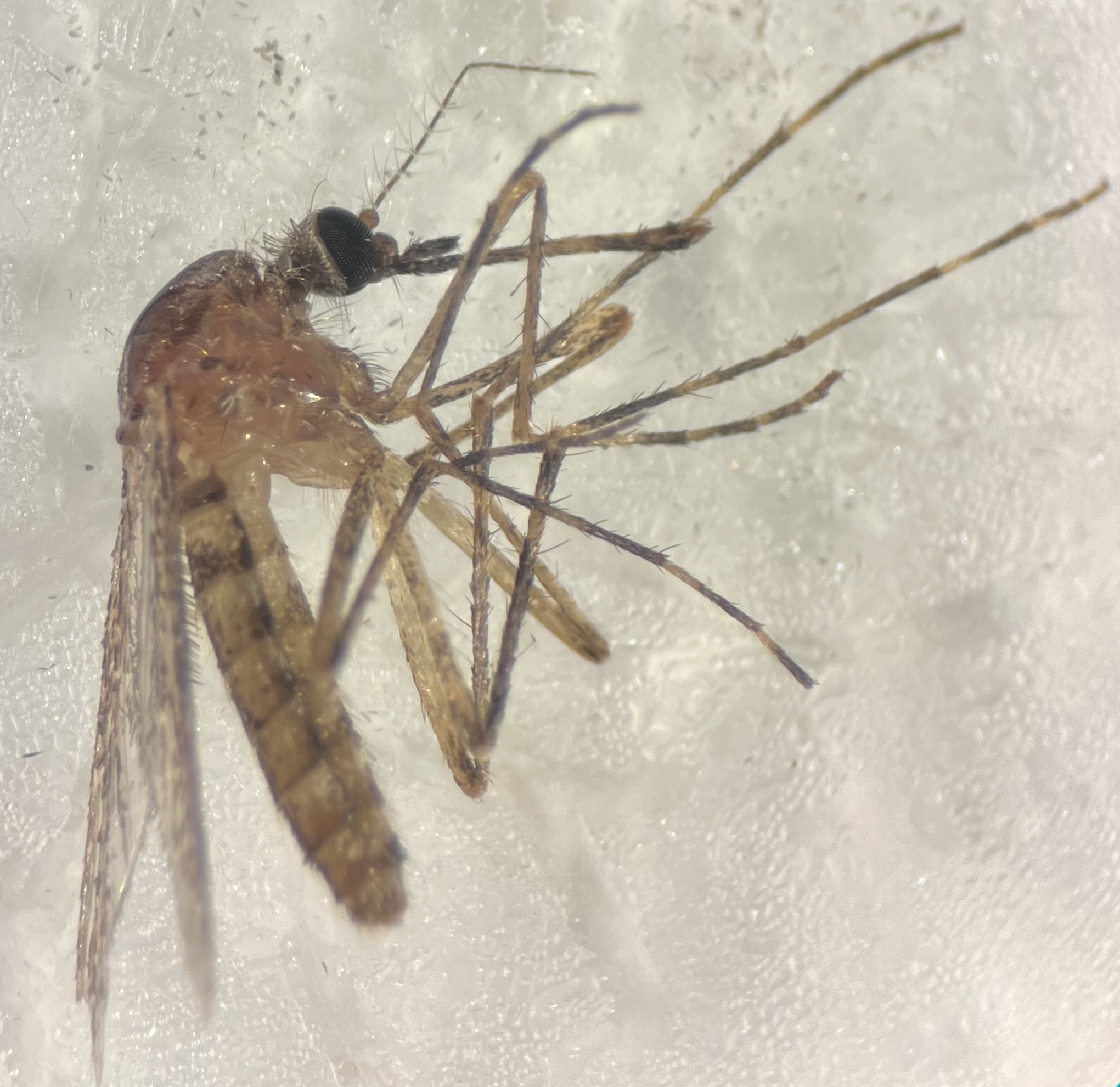
 As the lab has been gearing up for mosquito intensive work, this past week winded down on field work. Preparation, explanation, and identification were major themes this week.  Wells Reserve, sunrise 7/2/24 Mosquito Identification   Starting off, my Monday was almost exclusively focused on mosquito identification. In doing so, I was able to assist a research assistant in the lab in IDing mosquitos collected from CDC light traps. Of the mosquitos I looked at, there was a different purpose in identification then typical, reference specimen. Over time training and reference specimen used by the lab may lose distinguishable body parts including scales, legs, abdomen, and even heads. This makes it difficult to practice skills and use these mosquitos as a reference when identifying specimen to send to the state for testing. The majority of mosquitos I sorted were  Coquillettidia perturbans  which is a vector for West Nile virus (WNV). In the sample sorted there was 7...